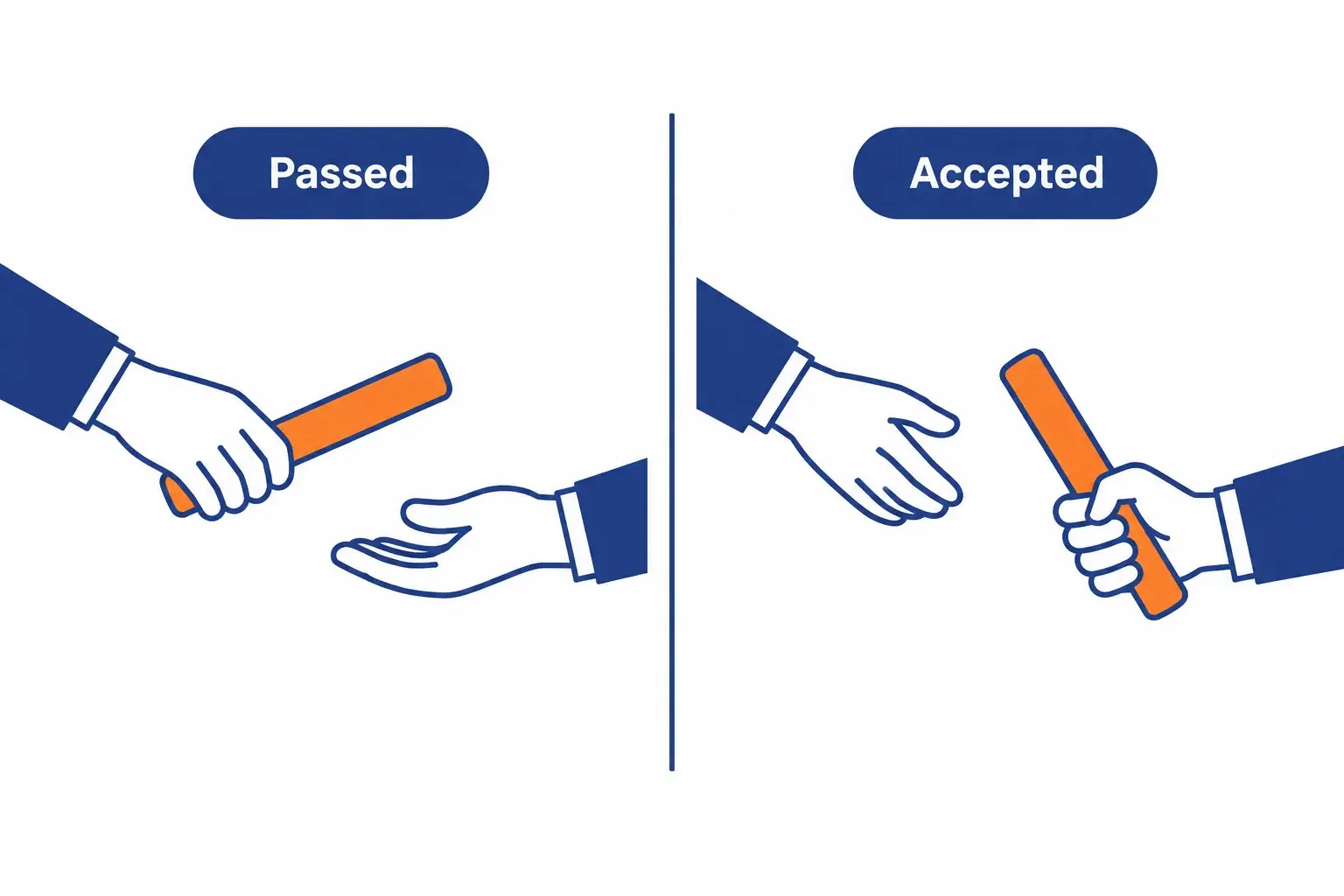
A fractional RevOps decision can be three different purchases wearing one label.
If you are a HubSpot-powered founder, you may be shopping for help while the portal still routes every question back to you. You might need tool support, someone to own the process, or a technical rebuild, and each proposal you collect may answer a different one.
They all say RevOps. Why do their proposals look nothing alike?
My position: before you compare fractional RevOps leadership providers, decide which of the three you are buying, then compare only the options that sell it.
What Fractional RevOps Leadership Actually Is
Fractional RevOps leadership is outside help that owns how revenue work is defined and run, part-time, without a full-time hire. In practice, firms under that label sell some mix of three service categories.
- Platform configuration: Setting up, integrating, or rebuilding HubSpot and the systems around it.
- Operating leadership: Owning the definitions, handoffs, and decisions the system runs on.
- Campaign execution: Producing the marketing that feeds the system.
When you know which category your problem sits in, the field narrows and the comparison becomes fair.
Why Provider Choice Hits HubSpot-Powered Founders Harder
- Fast setup: The portal may have been built quickly to start selling, before anyone defined what its stages mean.
- Founder as the system: Decisions about stages and handoffs still live in your head, so any provider has to get them out of you first.
- Mixed proposals: Each provider quotes the category it leads with, so prices and timelines are not comparing the same thing.
None of that is a vendor problem. It is a scoping problem.
The five options below are the provider types in Tingom Group's competitive research for this topic, described from what firms of each type publish, with none named. Each is held to the same criteria: the category it leads with, scope, first deliverable, ownership after launch, and price form, last.
Option 1: A Packaged HubSpot RevOps Retainer
If you want to see the commitment before the first call, you are probably weighing a packaged retainer, not a custom engagement.
- Leads with: Platform configuration, with recurring RevOps and marketing packages alongside it.
- Scope: Set by the package. Firms of this type publish tiers, including entry-level implementation packages.
- First deliverable: Set by the package you choose. Ask for it by name.
- Ownership after launch: Continues while the retainer runs.
- Price form: Published tiers, which can carry an initial term and an onboarding fee.
A packaged retainer makes the commitment visible early, so the work is confirming the package fits the problem you actually have.
Ask Whether You Need Onboarding Or An Ongoing Engagement
A setup package and an operating engagement solve different problems.
- Onboarding: Getting the portal configured once.
- Ongoing engagement: Someone running and adjusting the system each month.
Read The Exclusions Before The Price
A package price is only comparable once you know what it leaves out.
- Included: The work the tier covers.
- Excluded: What it leaves out.
- Term: How long you commit, and what it costs to start.
When you know what a tier excludes, a published price becomes a fair starting point instead of an anchor.
Option 2: A Technical HubSpot Architecture Specialist
If your portal needs custom data models or integrations that off-the-shelf setup cannot handle, you are probably weighing an architecture specialist, not a general partner.
- Leads with: Platform configuration at depth: implementation, integration, custom development, and strategy.
- Scope: Set by the technical problem. At least one firm of this type states it does not provide marketing content or campaign services.
- First deliverable: Set by the proposal. Ask whether it is a design, a build, or both.
- Ownership after launch: Set by the contract.
- Price form: Set by the proposal.
An architecture specialist fits when the constraint is technical, so the work is confirming the constraint really is technical.
Test Whether The Constraint Is Architecture Or Ownership
A custom build cannot fix a stage nobody has defined.
- Architecture: The data model or integration cannot do what the business needs.
- Ownership: The system could do it, but nobody decided what it should do.
- Behavior: The system is right, but the team works around it.
Ask What You Will Own When The Build Is Done
A custom build is only yours if someone inside can change it.
- Documentation: What the build is and why, in writing.
- Next change: Who adjusts it when the business does.
When the constraint is named and the build is documented, you hire for the skill the problem needs and keep what it builds.
Option 3: A HubSpot Partner That Also Runs Marketing
If you need more demand and better systems at the same time, you are probably weighing a partner that does both, not a systems-only firm.
- Leads with: Platform configuration plus campaign execution: implementations, demand generation, websites, and integrations.
- Scope: Set by the proposal. Firms of this type publish an assessment offer.
- First deliverable: Ask whether the assessment is the first deliverable, and what decision it supports.
- Ownership after launch: Set by the contract.
- Price form: Set by the proposal.
A combined partner fits when demand is the gap, so the work is confirming that demand, not process ownership, is what is missing.
Decide Whether You Need Demand Or Ownership First
More leads into an undefined pipeline add volume, not clarity.
- Demand gap: Too few qualified prospects reach the pipeline.
- Ownership gap: Prospects arrive, but nobody owns what happens to them next.
- Execution gap: Both are defined, but the system does not carry them out.
Ask Who Owns The Handoff Once Campaigns Start
Campaigns send leads somewhere, and someone has to own what happens there.
- Handoff: Who accepts a lead from marketing, and on what rule.
- Reporting: Who decides what the pipeline counts.
When the gap is named and the handoff has an owner, a broad partner becomes a choice instead of a default.
Option 4: A Stack-Wide Revenue Architecture Firm
If several revenue systems beyond HubSpot must work together, you are probably weighing a stack-wide firm, not a HubSpot-only partner.
- Leads with: Revenue architecture across a wider technology stack, with strategy, data, and operations services.
- Scope: Set by the proposal. At least one firm of this type describes a planning phase, gap analysis, and roadmap before execution.
- First deliverable: The plan or roadmap. Ask what decision it lets you make.
- Ownership after launch: Set by the contract.
- Price form: Set by the proposal.
A stack-wide firm fits when the problem spans systems, so the work is confirming your problem is that wide.
Size The Problem Before You Size The Engagement
How much architecture a decision needs should set the size of the engagement.
- Business problem: The decision or handoff that is failing.
- Systems involved: Which systems that problem actually touches.
- Expected deliverable: What you will hold at the end of the planning phase.
Ask What The Roadmap Lets You Decide
A plan is worth what it lets you decide next.
- Decision: The choice the roadmap settles.
- Evidence: What it draws on to settle it.
When the problem is sized first, you pay for the planning your decision needs, not the planning a larger client would need.
Option 5: A Fractional Operations Partner
If the portal works but nobody owns what its stages and handoffs mean, you are probably weighing an operations partner, not a build.
- Leads with: Strategic clarity and operating leadership, with hands-on system building behind it.
- Scope: In FlowOps360's case, set by engagement type: Strategic Clarity, Sprint, Assist, or a scoped Project.
- First deliverable: In a FlowOps360 system build, the definition layers come before anything is configured.
- Ownership after launch: Shared. Assist continues as a retainer, and the strategic owner of each stage stays inside your company.
- Price form: By engagement type: a defined piece of work, or a recurring retainer.
An operations partner fits when ownership is the gap, and it still needs you to name a strategic owner for each stage.
Check What Each FlowOps360 Tier Produces
The FlowOps360 delivery tiers name their outputs in advance.
- Focus: One playbook, one or two SOPs, a job aid, and an automation plan.
- Sprint: A full playbook, three to five SOPs, a QA review, and a handoff plan.
- Assist: A retainer with SOP fixes, playbook revisions, and a monthly QA review.
- Project: A full system build, templates, and custom reporting.
Hold FlowOps360 To The Same Criteria
The FlowOps360 Lifecycle Map gives every stage two owners.
- Tactical owner: The role that moves the work each day. A partner can hold this.
- Strategic owner: The role that decides what the stage means. That stays with you.
I call this the Two-Owner Rule. The framework calls collapsing the two the authority gap. Because of this, you can set our proposal beside any of the other four and compare what each leaves you owning.
When every option is held to the same criteria, the choice is about fit instead of who presented best.
Conclusion and Action Steps
Each option leads with a different service category, so each fits a different problem.
- Option 1: A packaged retainer, which fits when a published tier matches the problem.
- Option 2: An architecture specialist, which fits when the constraint is technical.
- Option 3: A partner that also runs marketing, which fits when demand is the gap.
- Option 4: A stack-wide firm, which fits when the problem spans several systems.
- Option 5: An operations partner, which fits when ownership is the gap.
Name the category you are buying, then compare only the options that lead with it.
Before You Move On
If you named whether you need tool support, process ownership, or a technical rebuild before comparing providers, you made the decision every other one depends on.
What This Tool Was Meant to Do
The three service categories and the Two-Owner Rule show which options fit your problem. They do not rank firms, and they do not predict how an engagement will go.
Note on Unclear Results
Messy results are normal. If your problem sits in two categories, solve the one the other depends on first.
The Three-Path Roadmap
Step 1: Learn Which Category You Are Buying
Learn: Write down the last three problems you escalated about the portal and mark each as configuration, ownership, or campaign execution. The category with the most marks is the one to buy first.
Step 2: Validate The Options That Lead With It
Validate: Put the five criteria to each option that leads with your category, and ask each for its first deliverable by name. If the first deliverable would not change a decision you face today, keep looking.
Step 3: Align On Who Owns Each Stage
Align: If the category is ownership and no one besides you can be the strategic owner of your stages, the gap is leadership, whichever option you choose. Explore a FlowOps360 Diagnostic with Tingom Group, and bring your three escalations and your current stage list.
One Last Thought
The right partner takes the questions off your desk, not only the tasks. Name what you are buying first, so the help you hire solves the problem you actually have.
Stop Comparing Proposals For Different Problems. Build A Choice Around The One You Have.
Treat Revenue Operations as a managed leadership system, not a pile of separate vendor scopes.