
Build one GTM system your teams can actually follow.
When marketing, sales, and service work from different definitions, handoffs, reports, and customer context, the revenue motion gets harder to trust. The Revenue Alignment Blueprint helps clarify the shared logic, HubSpot structure, and operating rules that keep the customer journey connected.
Start with the GTM Gap Finder →A simple first step to see where your customer journey is losing context.
The Problem
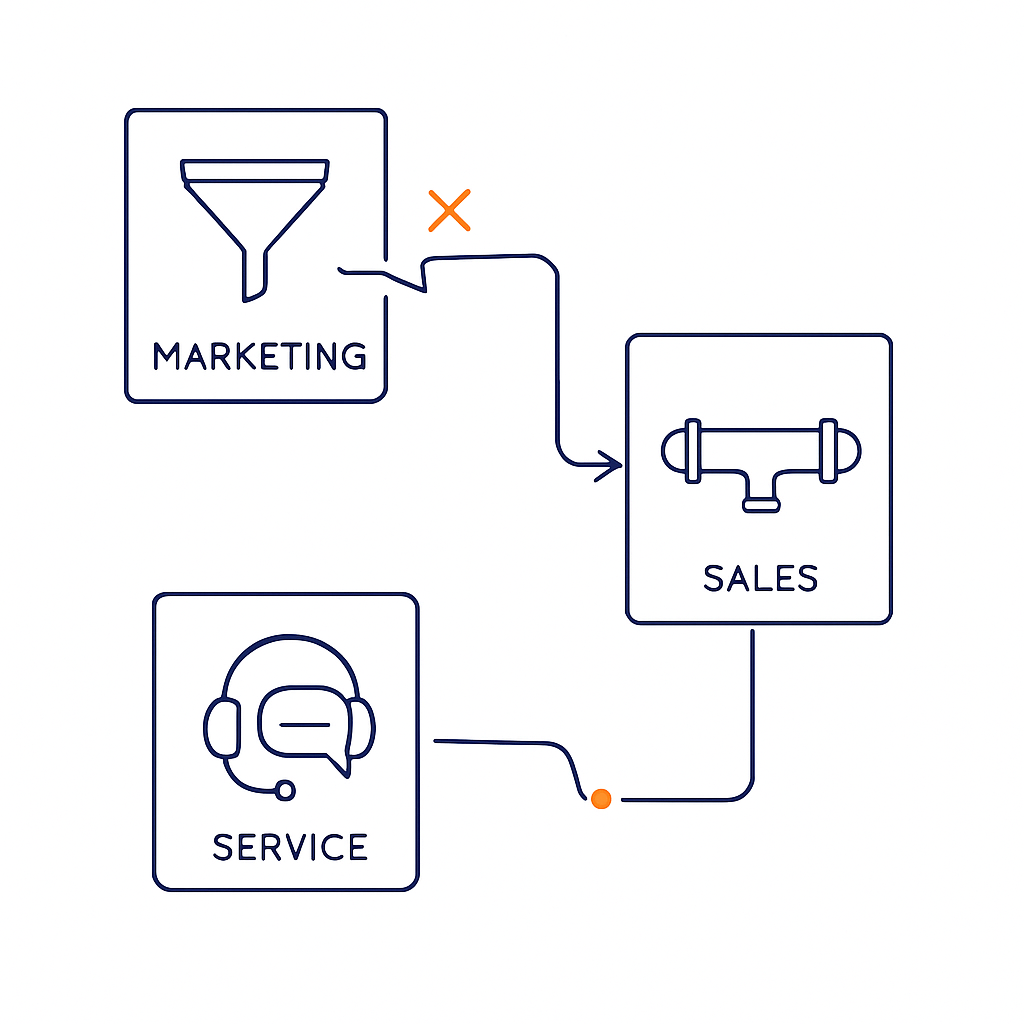
Misaligned teams create broken customer journeys.
Most growing companies treat marketing, sales, and service as separate worlds. When those teams do not share the same definitions, customer context, and reporting logic, the revenue engine starts to leak.
The “good lead” debate
Marketing and sales argue over lead quality because there is no shared definition of what should move forward.
Handoff friction
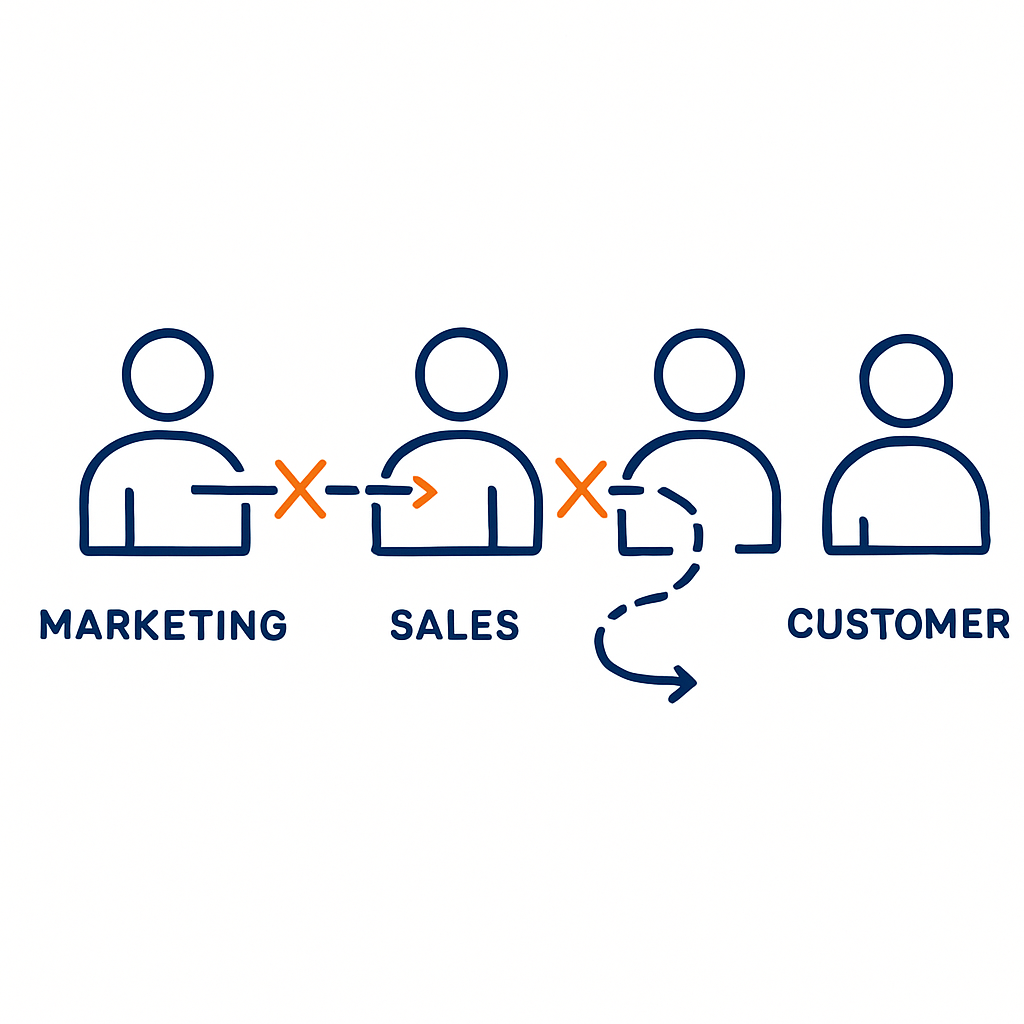
Deals slow down or lose context when a lead moves from marketing to sales, or from sales to service.
Conflicting reports
Each team has its own version of the truth, forcing leadership to interpret the story instead of act on it.
Customer confidence loss
Customers feel the internal gaps when they have to repeat their story to every new person or department.
Blind funnel visibility
Leadership cannot see the full customer lifecycle clearly enough to know where to invest or what to fix first.
Alignment problems are normal. They are not sustainable.
The Blueprint installs the shared definitions, handoff logic, HubSpot structure, and operating rhythms your teams need to move together.
Revenue Continuity
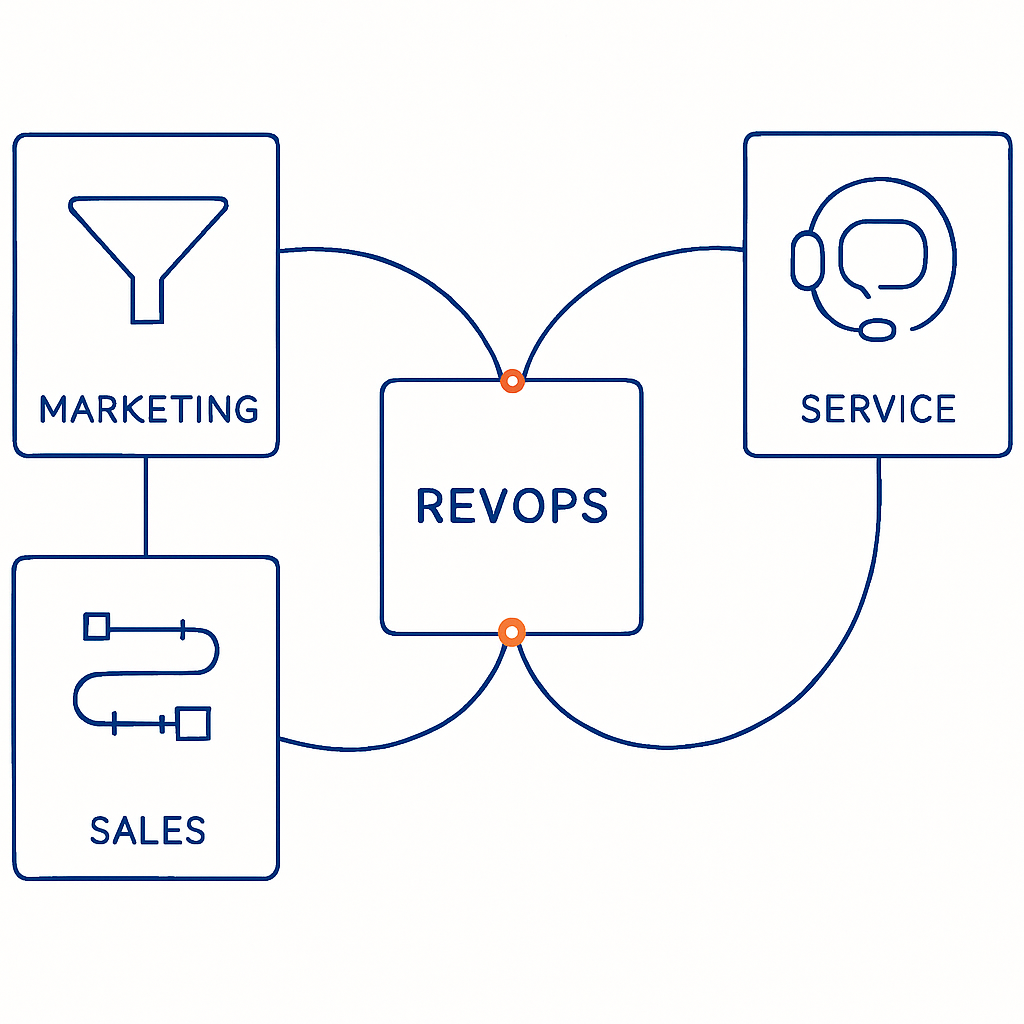
Configuration is not enough. The customer journey needs shared operating logic.
We help HubSpot-powered operators connect their teams around a single customer record so context travels from marketing to sales to service without depending on memory, Slack threads, or founder translation.
Full lifecycle expertise: Align marketing, sales, and service around the customer data that matters.
Practical operational focus: Build the definitions, SLAs, handoff rules, and workflows that guide real work.
Sustainable governance: Create the frameworks and documentation needed to maintain alignment as the team grows.
Your Path to a Clearer GTM Engine
A three-step framework from scattered GTM activity to aligned execution.
The Blueprint clarifies the GTM gap, designs the shared revenue logic, and turns that logic into HubSpot structure your team can use.
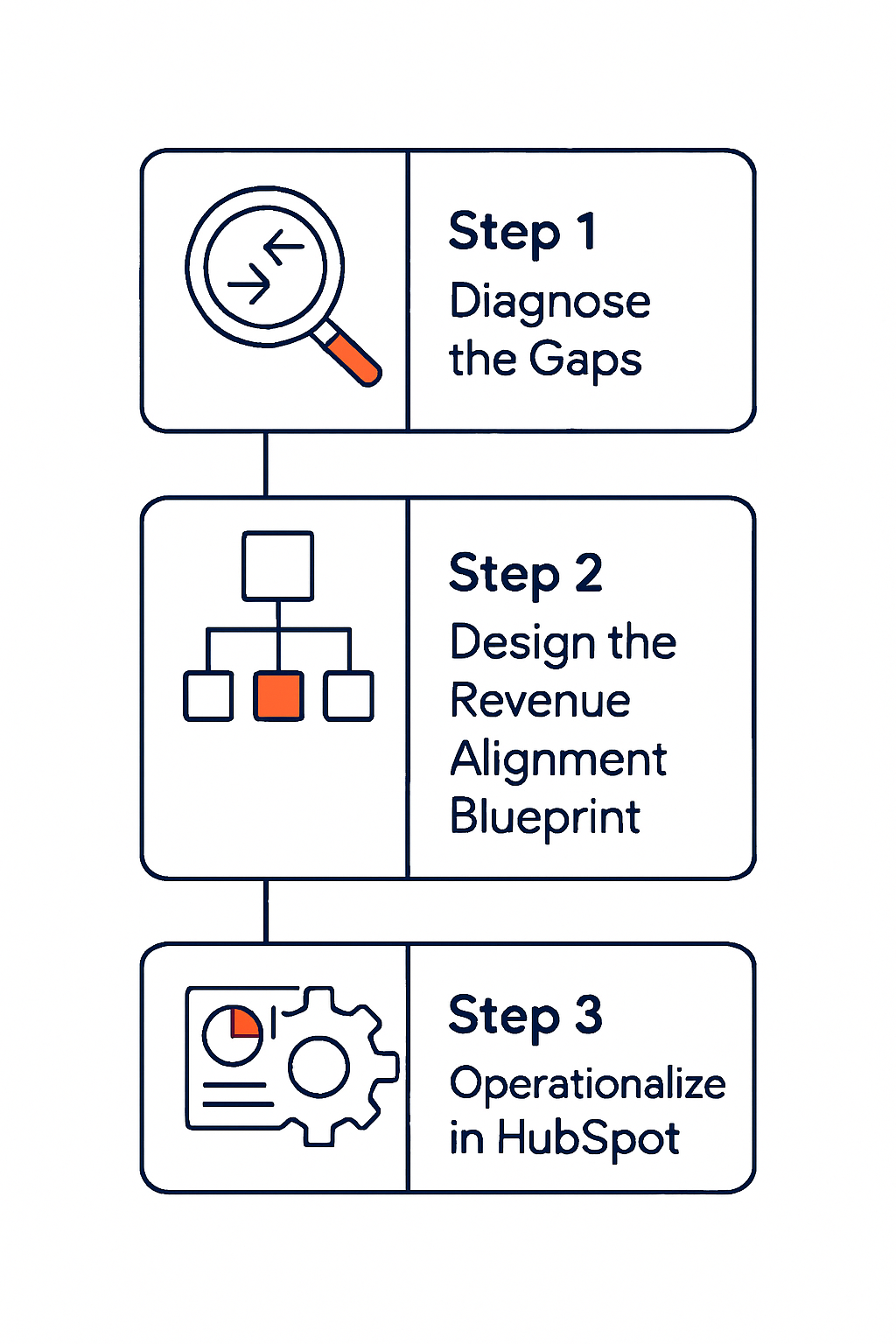
GTM gap assessment
Assess positioning, lifecycle definitions, handoffs, CRM structure, and data flow to identify where friction is slowing revenue down.
Strategic blueprinting
Clarify target audience, offer logic, lead quality standards, sales handoffs, and shared GTM definitions.
HubSpot execution alignment
Turn the strategy into HubSpot properties, workflows, pipelines, lifecycle rules, and reporting views that support clearer ownership.
No vague theory. Just a clearer view of the GTM gap and the operational next steps to address it.
What Is Inside
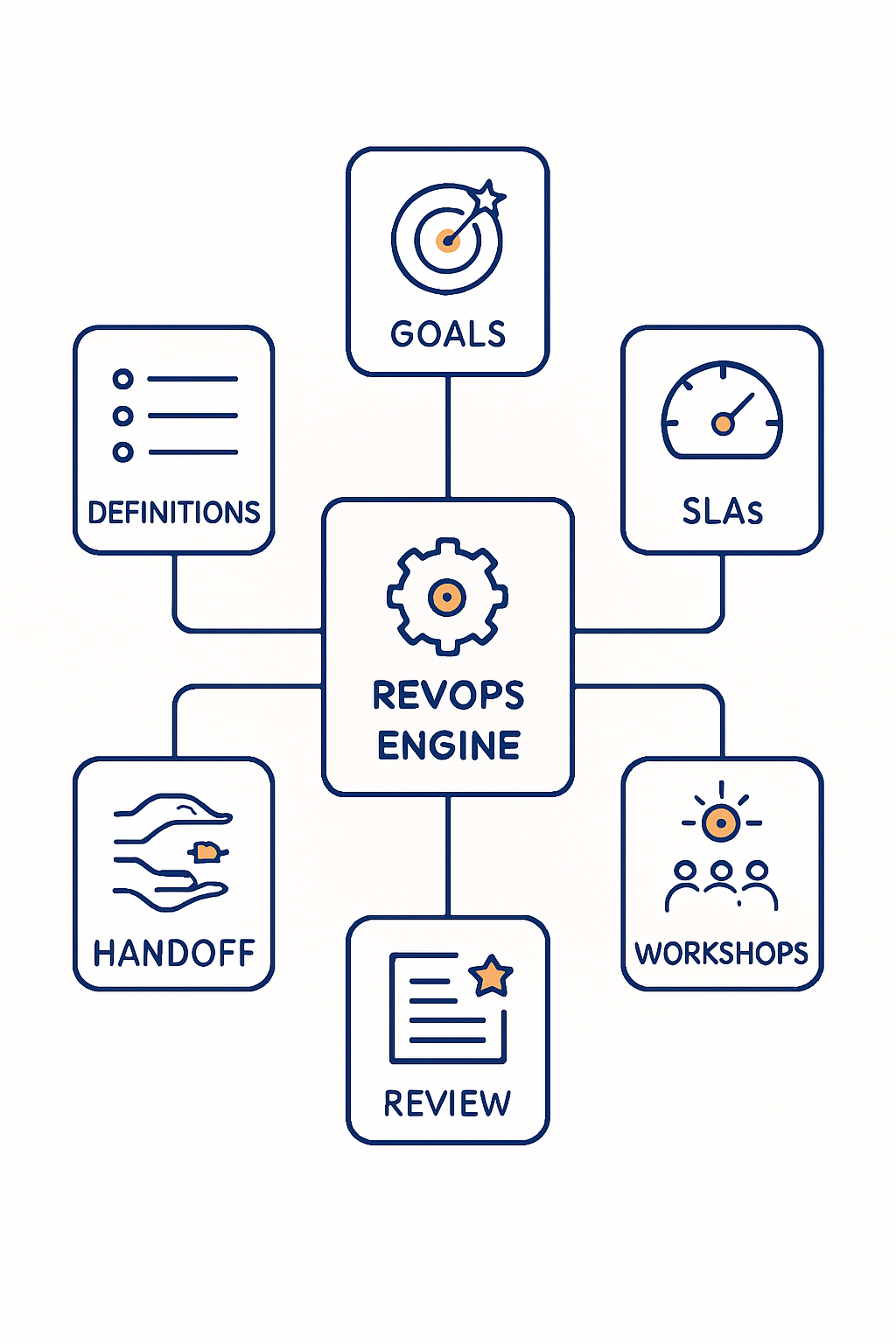
What is inside the Revenue Alignment Blueprint
We combine strategic architecture with operational governance so your teams do not fall back into old siloed habits after the workshop ends.
Phase 1: Strategic Foundations
MQL and SQL definitions
Establish shared lead stage definitions so everyone knows when a lead moves from marketing to sales.
Revenue goal alignment
Synchronize targets so campaigns, outreach, sales follow-up, and service priorities support the same outcomes.
SLA development
Define response times, ownership expectations, and handoff rules so lead decay is easier to prevent.
Lifecycle handoffs
Design a feedback loop so leads, opportunities, customers, and service needs move with clearer context.
Phase 2: Operational Governance
Once the strategy is built, we support the operating rhythm that keeps the GTM engine aligned and improving.
Alignment workshops
Regular sessions to refine definitions, adjust SLAs, and maintain one shared playbook.
Content assessment
Review sales and marketing assets for message consistency across the customer journey.
Performance reporting
Review unified KPIs to spot friction and make practical adjustments.
Project governance
Manage RevOps initiatives so stakeholders, deadlines, and decisions stay aligned.
Expected Outcomes
90 days to a clearer GTM journey.
Context moves with the customer. You stop carrying it for the team.
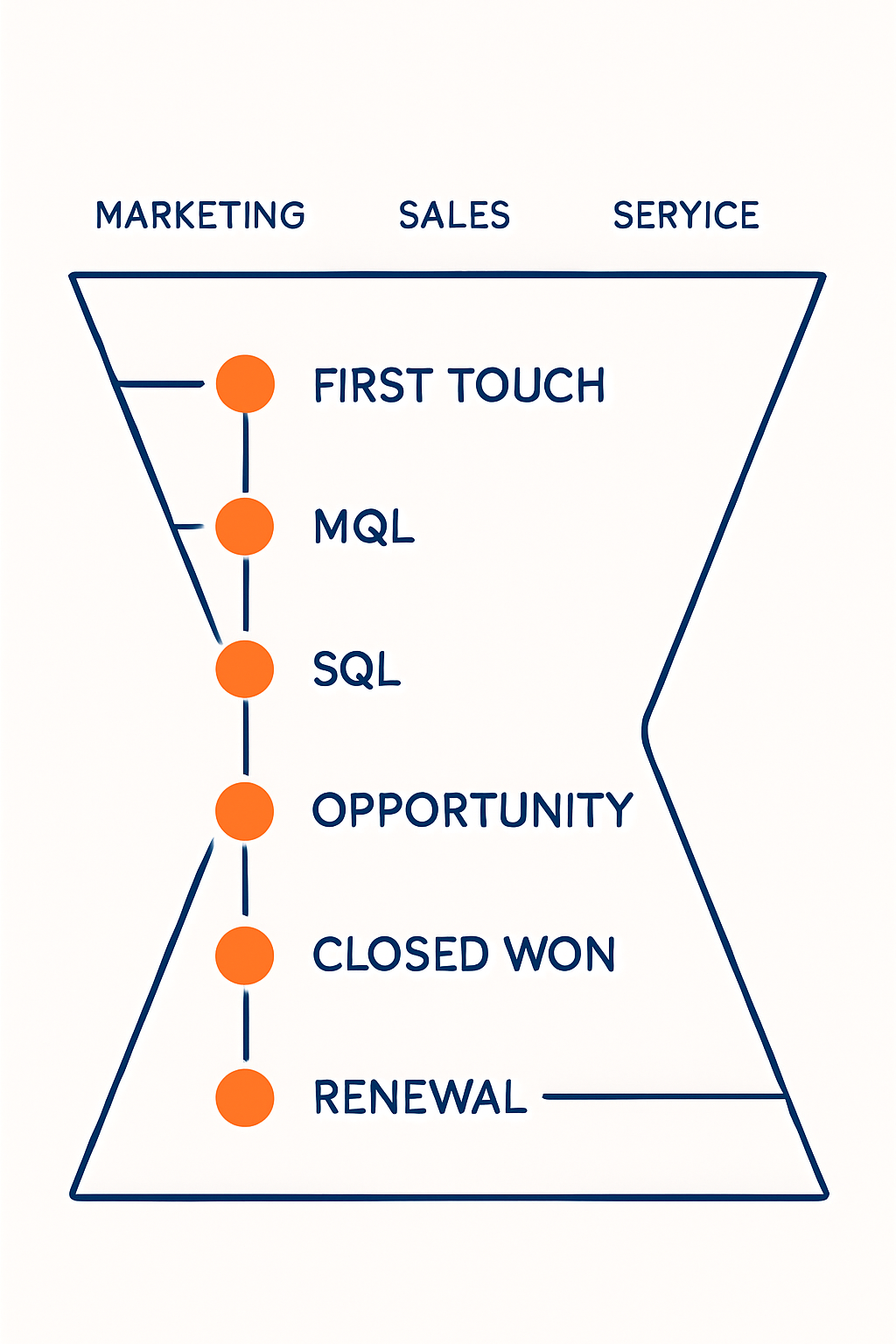
Shared GTM strategy and definitions: Marketing, sales, and service know what a qualified lead looks like, what happens next, and who owns the handoff.
Cleaner GTM handoffs: Lifecycle transitions are clear, tracked, and supported inside HubSpot.
Pipeline and funnel visibility: Leadership sees how revenue moves from first touch to closed deal and beyond.
Customers stop repeating themselves: The team can see the context that matters across the journey.
The Cost of Misalignment
Postponing GTM alignment has a cost.
Alignment is not just an internal team issue. Every day teams stay siloed, the GTM engine loses speed, trust, and clarity of execution.
The blame game
Sales blames marketing. Marketing blames sales. Service inherits the confusion. Focus moves away from revenue-producing work.
Silent revenue leakage
Prospects and customers feel the gaps during handoffs. Follow-up slips and value leaks before the relationship reaches its potential.
The growth plateau
Growth stalls when strategy, sales, CRM, and service pull in different directions.
FAQ
Common questions
Do we need all three teams involved?
Ideally, yes. The strongest results come when marketing, sales, and service are part of the Blueprint conversations, even if they join different sessions.
How is this different from a normal strategy workshop?
Traditional workshops often end with a slide deck. The Revenue Alignment Blueprint ends with definitions, SLAs, handoff rules, procedures, content recommendations, and HubSpot execution logic that guide real work.
How long does the engagement usually last?
The core blueprint work happens in the first several weeks, with ongoing monthly support available to maintain and improve alignment.
What if we already have definitions and SLAs?
Great. We review what you have, keep what works, fix what does not, and connect the definitions to your HubSpot data, reporting, and handoff logic.
Can we start with an audit only?
Yes. If you are not ready for the full Blueprint, you can begin with a focused alignment audit, then expand into SLAs, workshops, and HubSpot build-out when the next step is clear.
Start with clarity
Find the GTM gaps before your teams keep scaling around them.
Use the GTM Gap Finder to identify where your strategy, HubSpot portal, lifecycle stages, handoffs, reporting, and customer journey are losing alignment.
Start with the GTM Gap Finder →Prefer to talk first? Book a Discovery Call.