What Is the Best CRM for Financial Advisors?
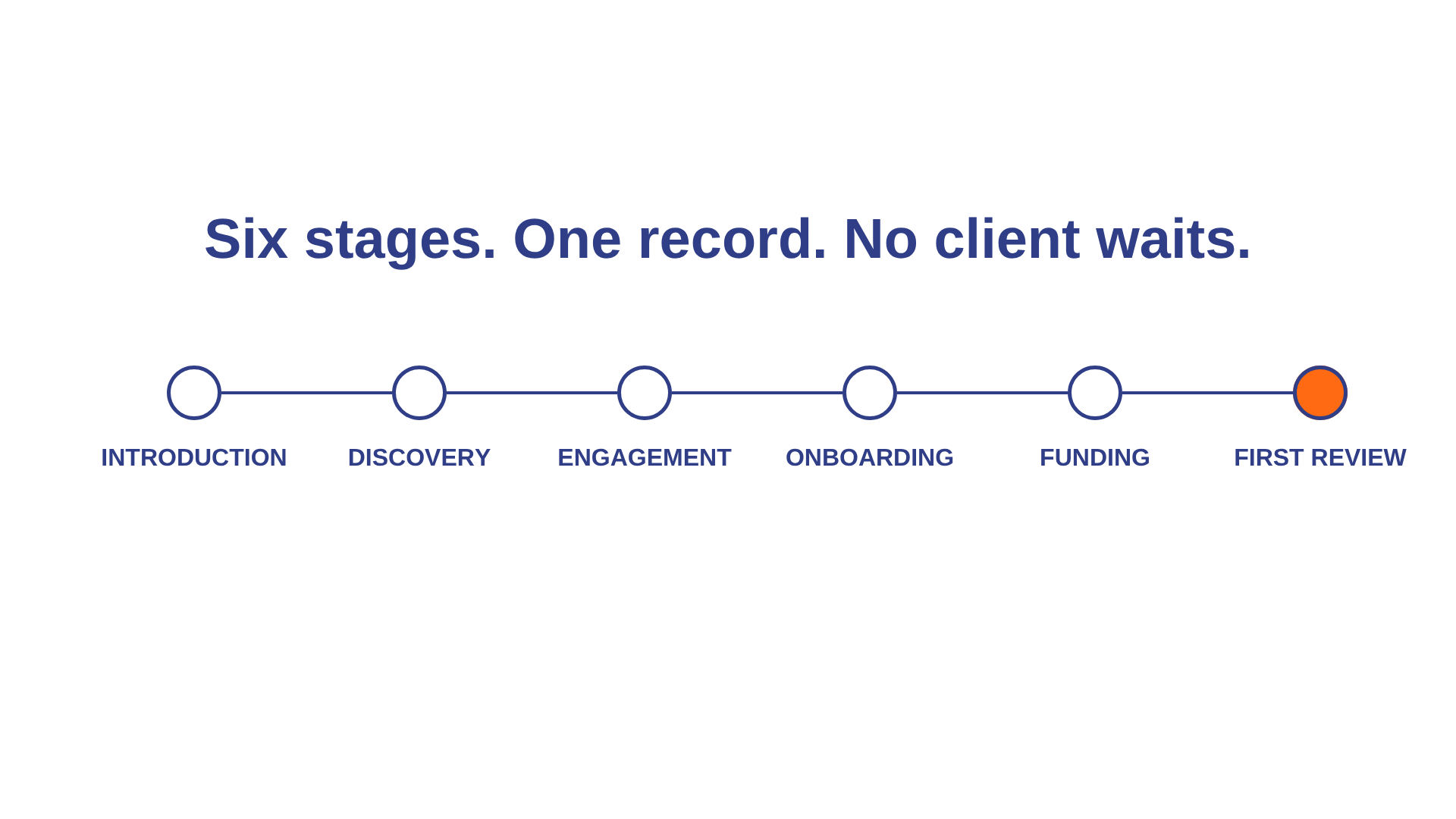
The best CRM is the one that fits your firm's needs and that your team will actually use. For an advisory firm, that means six client stages: introduction, discovery, engagement, onboarding, funding and first review. When your team runs every stage in the CRM, no household waits on someone's memory.
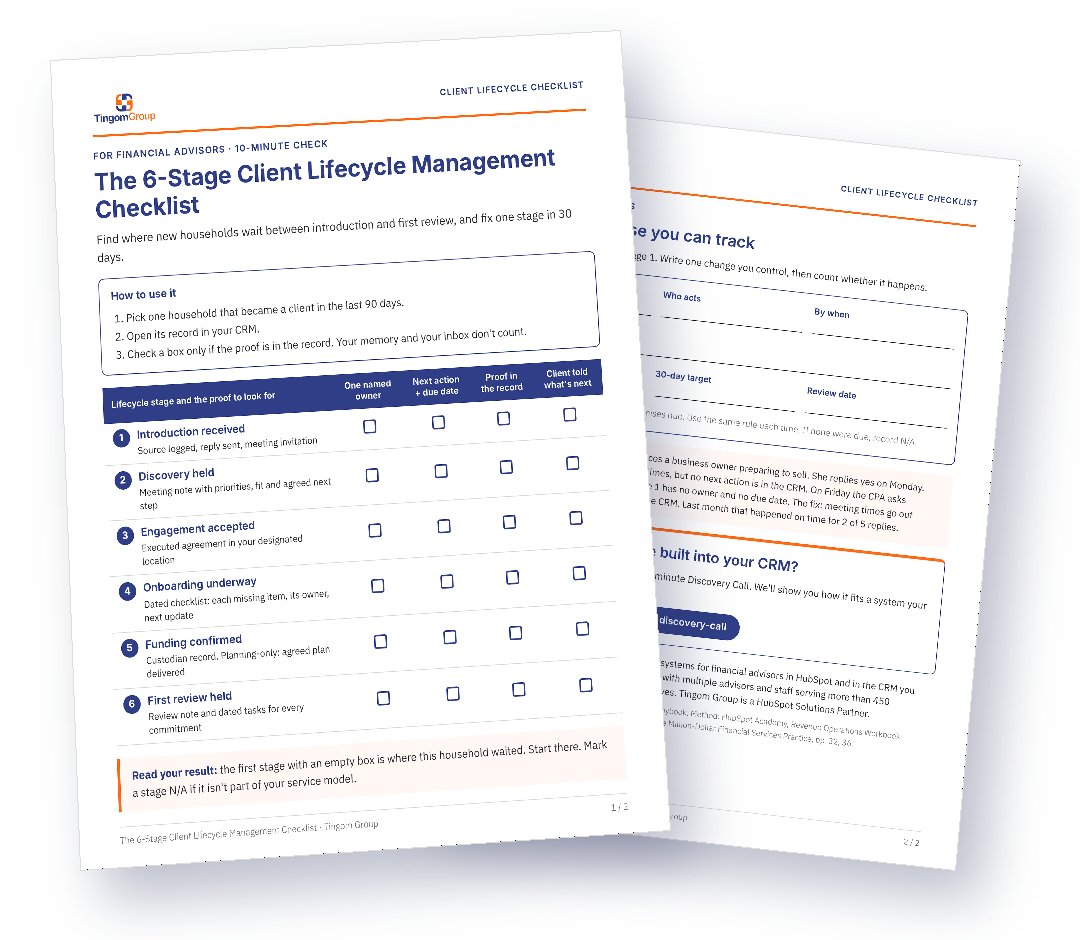
Find the first stage with no proof in your record.
Get the free 6-Stage ChecklistThere is no best CRM, only the best fit
There is no best car. There is the best car for the job and the driver. A contractor needs a truck, a commuter needs a sedan, and a car that sits in the garage is worth nothing, no matter how good its reviews.
The same is true of CRMs. Firms manage different things, and teams work differently, so no single product is best for everyone. Instead of asking which CRM is best, ask two questions. Does it fit what your firm needs to manage? And will your team actually use it?
Fit matters because the CRM doesn't work alone. It sits next to your custodian platform, your planning software and your document storage. Those tools keep doing their jobs. The CRM is the shared record: it shows where each household stands and what happens next, so no one has to check five systems to answer one question.
Why work gets missed
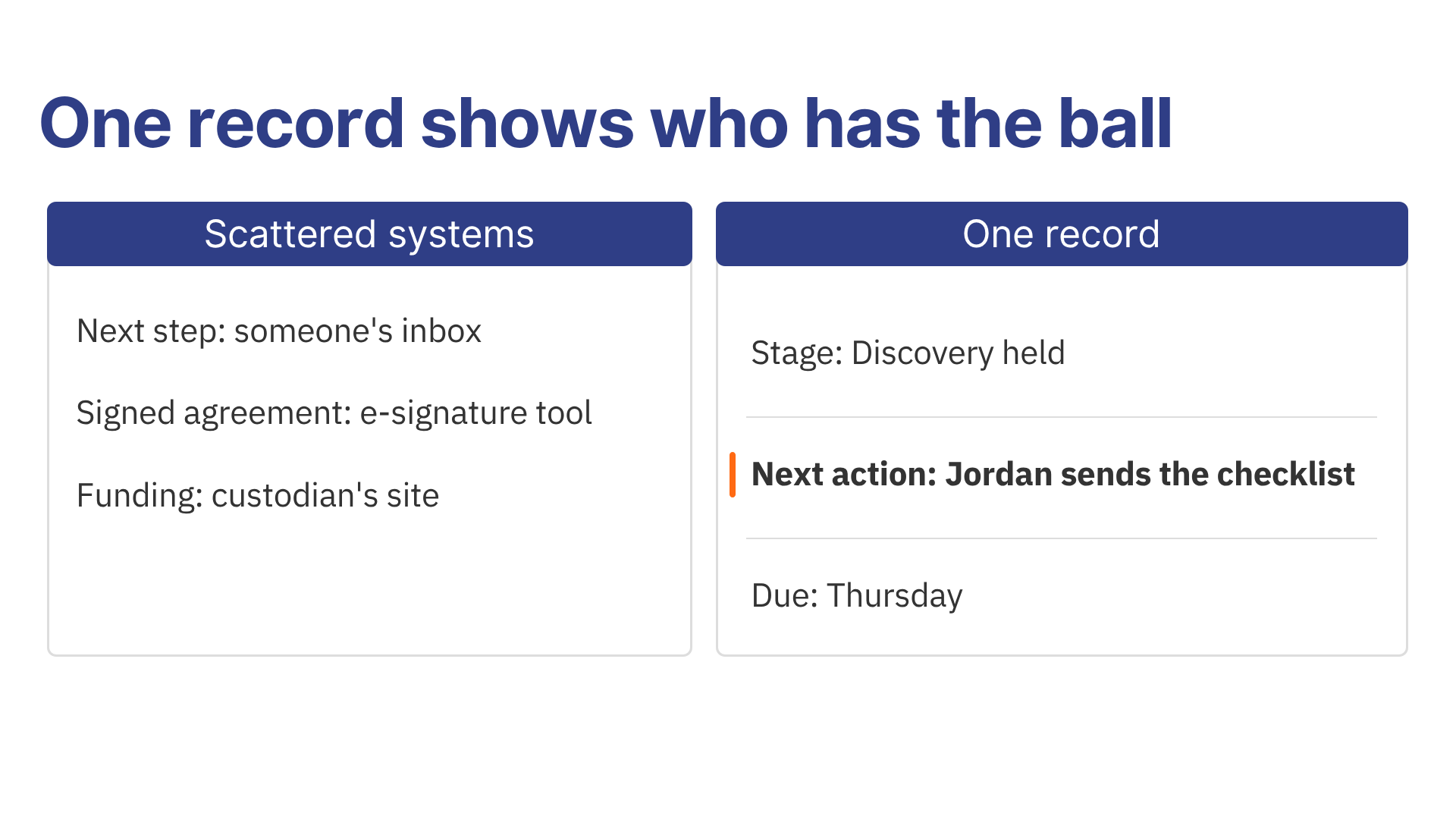
Most firms don't have a software problem. They have scattered systems that keep the work in someone's head. Client details live in one tool, the next step in an inbox, the signed agreement somewhere else, and nobody trusts the CRM enough to look there first.
So everything runs through you. It's exhausting, and it leaves you scrambling every time someone asks for information. A growing firm needs a system it can rely on, not more last-minute effort.
Try this. Pull three recent clients at random and open their records. Can you see what was promised, who owned each step and when the last update happened? Wherever you can't, that's where work is slipping.
What a reliable record looks like across six stages
Here's one household. A CPA introduces a business owner who is preparing to sell her business. Two people serve her: the client's primary advisor, who owns the relationship and the advice, and Jordan, the junior advisor, who owns the follow-through.
The same pattern holds for a solo advisor with a young couple or a larger team with a retired couple's complex accounts. Different people, same stages, one record.
At each stage, ask two questions. What does the firm need to manage here? And does the record show it was done?
1. Introduction received
Her CPA makes the introduction. It could just as easily have been a client referral, an event or an inbound inquiry. Either way, the firm needs to know where she came from, why she was introduced and who owns the reply.
Jordan records the source and the reason. If it isn't clear whether she's a fit, the primary advisor decides. Once she agrees to talk, Jordan sends meeting times. Her record now shows how she arrived, who owns the reply, and the invitation that went out. Because the source and the person who referred her are recorded separately, the firm can see later which sources turn into funded households.
Go deeper: how to track referrals from introduction to funded household.
2. Discovery held
Every household's next meeting starts where the first one ended, no matter who on your team runs it.
During discovery, she asks what to bring to the next planning conversation. The primary advisor answers before the meeting ends, right in front of her: "Jordan will send the checklist by Thursday. I'll review what you send before our next meeting." Jordan records the decision and sends the recap.
Anyone who opens her record now sees her priorities, whether she's a fit, who else is involved, and the next step with its date.
3. Engagement accepted
The primary advisor confirms the scope of service and the fees with her. Once the agreement is signed, the primary advisor hands her to Jordan with three questions answered. What did we promise? Who is she expecting to hear from? Does this engagement need funding?
Jordan accepts the handoff and opens her onboarding record. It notes that the signed agreement is in the firm's designated location and when it was signed, whether this is asset management or planning only, who owns onboarding and when her first update is due. What was promised no longer depends on anyone's memory.
4. Onboarding underway: carry the promise forward
Jordan sends the agreed checklist and tracks every missing item: what it is, who owes it and when she'll hear back. Any question that changes the advice or the scope goes to the primary advisor. If a document is still missing, whether she owes it or the custodian does, a named advisor follows up.
That checklist carries the promise forward. Anyone on the team can see what's missing, who owns it and when the next update is due.
Go deeper: running onboarding from signed to funded.
5. Funding confirmed, if applicable
For asset management, Jordan checks the custodian's record to confirm the money arrived. Until it has, the transfer stays open with a follow-up date, and a partial transfer stays open too. For planning-only work, the milestone is delivering the agreed plan.
The custodian's record proves the money arrived. The firm's record keeps the original promise, the dated transfer status and the funded date, so you can count the days from signed agreement to funded account.
Go deeper: setting client expectations during an ACATS transfer.
6. First review held
Jordan prepares an agenda with every promise still open. The primary advisor walks through her priorities and decisions with her, and Jordan records each commitment and confirms the next service date.
That closes the loop. The review note is on her record, every commitment has a dated task, and the next review date is set.
Six stages, one record. When each stage leaves a clear record of what happened and what comes next, no one has to remember where she stands, and anyone on the team can take the next step.
Questions firms ask before choosing a CRM
What software do most financial advisors use?
Most use several tools at once: the custodian's platform, planning software, intake forms, e-signature and a CRM. What matters is which one your whole team reads to see where a household stands.
Which CRM is best for financial advice?
The one that matches the stages your firm manages and that your team uses every day. Before you switch, start with the CRM you already have and reuse its stages where they fit.
Will CRM be replaced by AI?
No. The CRM holds the record: every household's interactions and the context from the other tools your firm uses. AI can draw on that context to help your team work, but it can't replace the record it draws from.
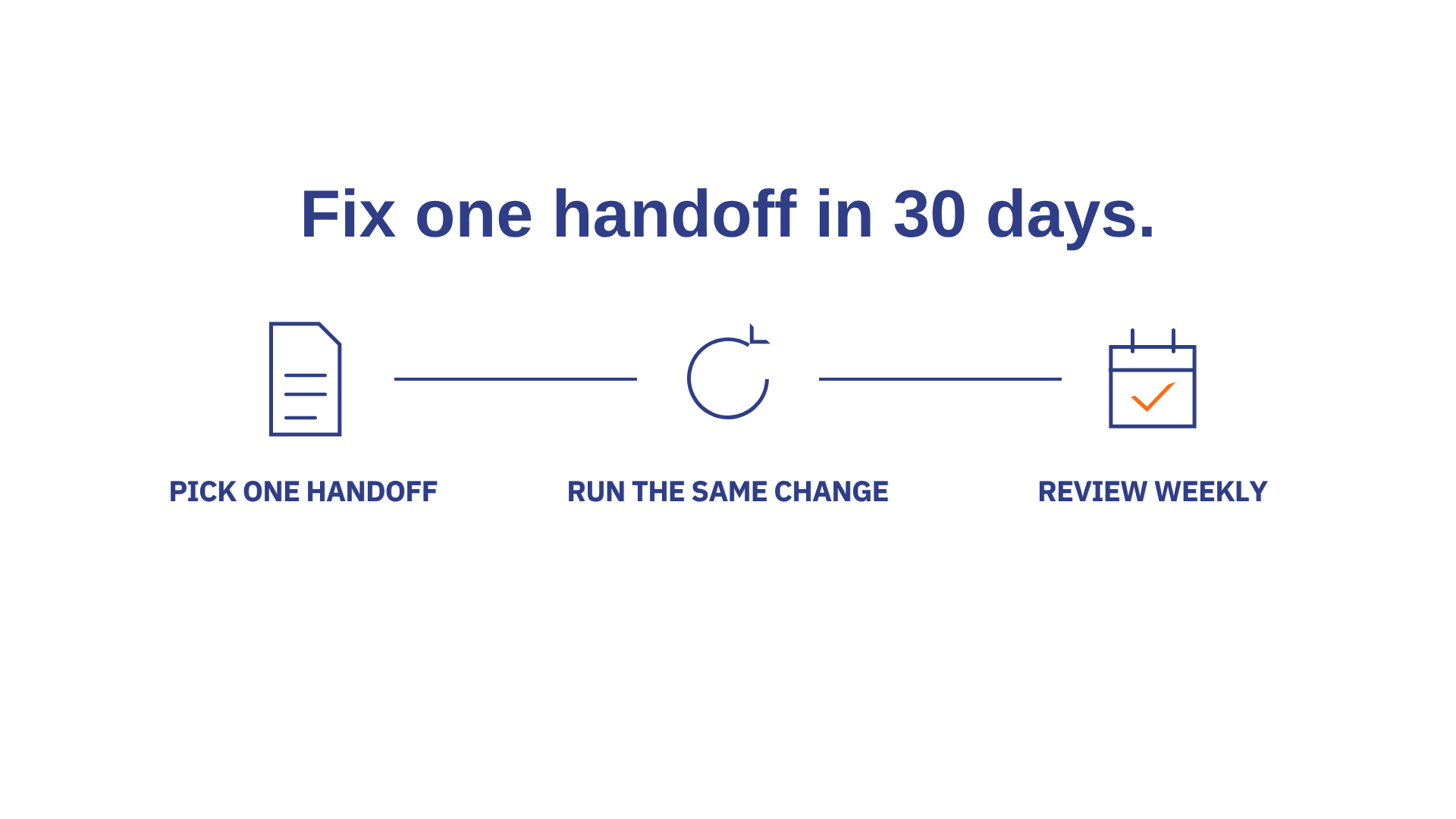
How to start: fix one handoff in 30 days
You don't have to fix all six stages at once. Start with one handoff and measure it.
- Pick one handoff. In week 1, choose the handoff where things slip most, such as signed agreement to onboarding. Look at recent clients, note where a step stalled, and count how many promises were delivered on time out of those due.
- Run the same change. Write down what should happen at that handoff and who owns it, and put it in your CRM or checklist. In weeks 2 and 3, use it on every eligible client, with one named owner and one due date for each next step.
- Review weekly for 30 days. Hold a 15-minute meeting each week: overdue promises first, then households waiting on someone, then the count. In week 4, keep the change or adjust it.
Where the RIA Client Engine fits
If you want the six stages built for you, the RIA Client Engine by Tingom Group connects prospect follow-up, signed-client onboarding and ongoing reviews in the CRM you already run. The primary advisor sees where every household stands. The junior advisor opens a record and sees what to do next, who is waiting and when an update is due.
You'll know it works before you rely on it. Every stage is tested with sample households and signed off by your team.
We've run the same handoffs you run
We know what it's like when your firm grows faster than its systems and everything still runs through you. We co-founded a financial practice with multiple advisors and staff serving more than 450 households, so we've run these handoffs ourselves.
What a missing record costs, and what changes when it's there
Without one record, the cost builds quietly. Clients slip through handoffs nobody owns. A promise made in a meeting has no owner and no date, so the client waits. When someone asks for a record or a number, you can't find it fast or trust it when you do. And every new client adds more work to the same few people.
With one record, every household moves from first contact to first review with a named owner at each step. Both advisors can see who acts next on every open item. Records and numbers are easy to find, and you can trust them. Instead of holding everything together yourself, you lead a firm that runs on its system.