
Your HubSpot Portal Knows the Prospect's Name. It Has No Idea What Happens After They Sign.
The pipeline ends at 'signed.' The onboarding starts somewhere else. And the space between those two moments — custodian paperwork, ACATS tracking, funding confirmation, compliance document collection — lives in your head and your inbox.
Start with the Sales Audit & Strategy →A structured audit that maps how your practice sells and onboards today.
The usual fixes
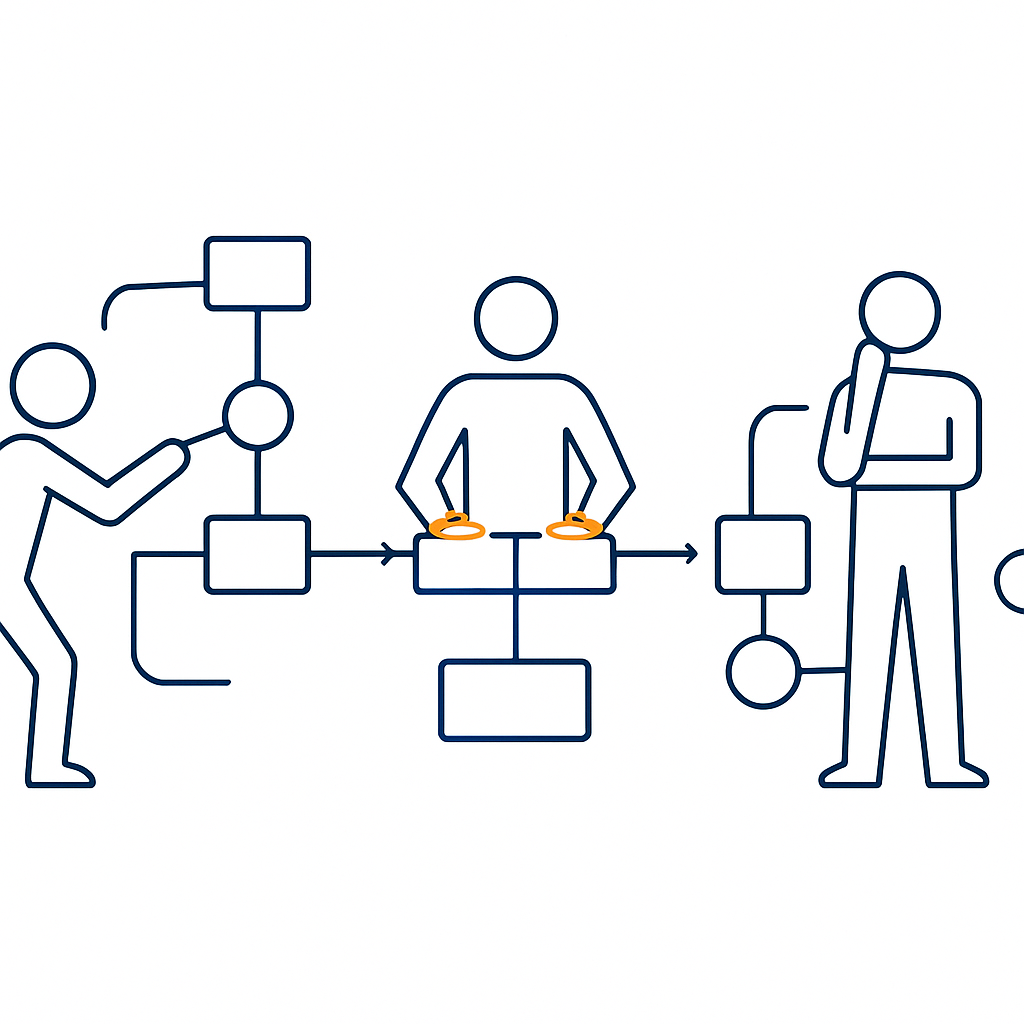
This is what happens when a practice is built around the founder's memory instead of a system the team can run.
You have probably already tried to fix it. Most founders do. Here is the list that usually gets worked through first:
Hired a HubSpot consultant
...who built a pipeline, called it done, and left you with a portal nobody trusted.
Bought a project management tool
...Asana, Monday, ClickUp — that now runs parallel to HubSpot and creates more handoff gaps, not fewer.
Built internal checklists
...that live in a Google Doc the team forgets to open after the first two weeks.

System-dependent practice
What the Practice Looks Like When the System Runs Without You
Imagine Monday morning. A prospect moved through your pipeline over the weekend — referral source logged, follow-up already queued, no action required from you. A client who signed on Friday is already three steps into onboarding.
No prospect goes dark. Every intro, every referral, every inbound inquiry has a follow-up scheduled and a source logged.
Onboarding runs on a track. Custodian account, ACATS transfer, funding confirmation, compliance docs — each step is a visible stage.
Compliance is a by-product, not a project. Documents are collected as part of the process. When the auditor asks, you pull a report.
The structural problem
The Real Problem Is Not Your Pipeline. It Is What Your Pipeline Was Never Built to Handle.
The insight that changes things: the acquisition pipeline and the onboarding runway are one connected motion. Separating them into different tools is where the friction is born.
The standard advice
The standard advice is to 'get your CRM in order.' Build a pipeline. Track your deals. Automate your follow-up. And that advice is not wrong — for a software company, or a marketing agency, or any business where closing the deal is the finish line.
The reality for RIAs
But RIAs are different. When a client signs, the work is starting. There is a custodian account to open. There are assets to transfer — sometimes across multiple institutions. There is funding to confirm. There are compliance documents that need to be collected, stored, and retrievable.
The RIA Client Engine
A HubSpot Built for the Way RIAs Actually Work
The RIA Client Engine is a fixed-scope HubSpot build designed around the three things an RIA practice actually has to do: win the client, onboard the client, and run the practice without the founder in the room for every step.
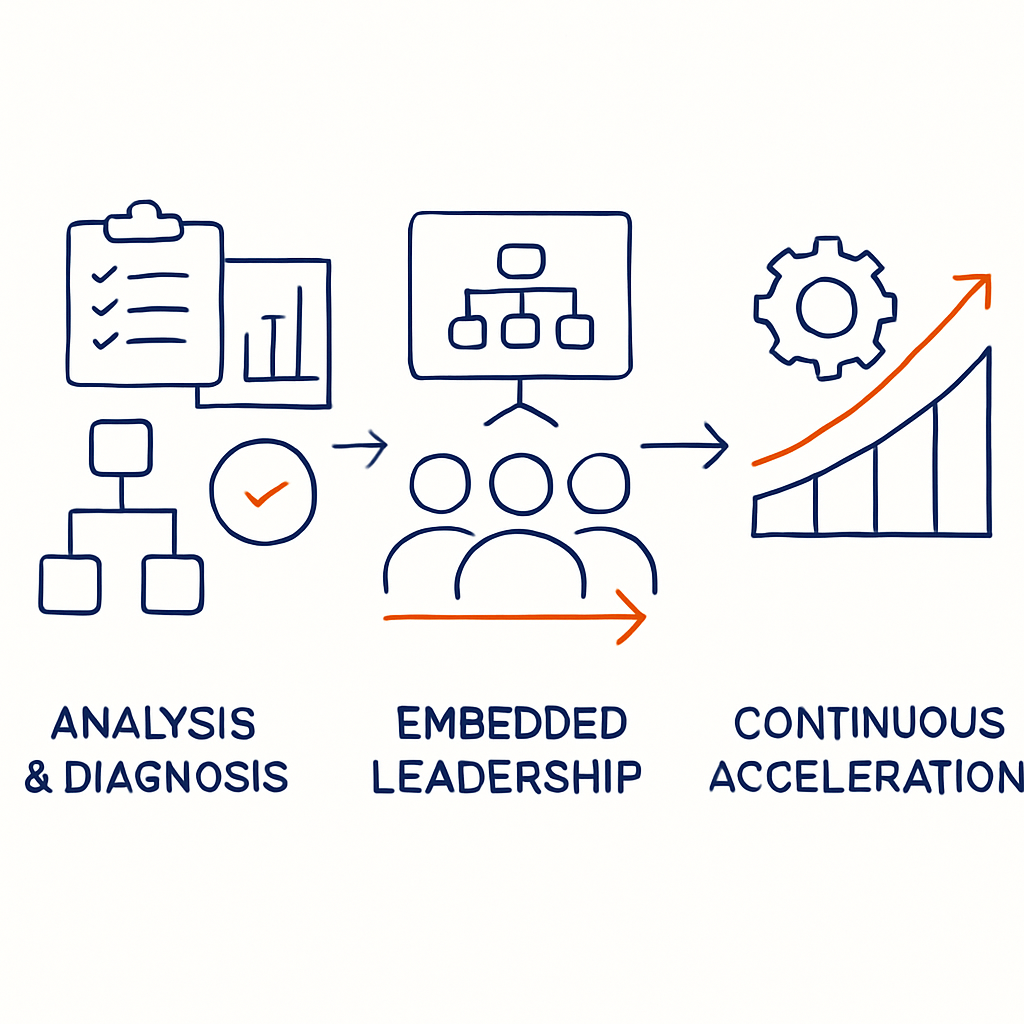
Stage one is Acquire.
A prospect pipeline whose stages match how advisors actually close: intro, discovery, proposal, paperwork, signed.
Stage two is Onboard.
The onboarding runway — from signed to funded — becomes a repeatable, visible process inside HubSpot.
Stage three is Operate.
Clean fields, lifecycle logic, pipeline and activity dashboards, and ongoing optimization as the practice grows.

Continuous momentum
A Portal the Team Trusts as the Practice Grows
A HubSpot build that works on day one but breaks down six months later is not a solution — it is a deferred problem.
Referral tracking
Referral source tracking is built into the structure, not bolted on as an afterthought.
Automated follow-up
Follow-up automation means no prospect goes quiet after an intro call or a proposal. The system carries the cadence.
Defined handoffs
Handoffs between team members are triggered by stage movement, not by someone remembering to send a message.
Clear dashboards
Pipeline, activity, and funded-client dashboards give you a clear view of the practice without requiring you to build a new report every time.
System architecture
The Practice You Built Deserves a System That Can Run It
You got to $2M by being the person who knows everything, follows up on everything, and catches what everyone else misses. That skill is real. It is also the thing that stops you from getting to $5M without burning out.
The RIA Client Engine does not replace your judgment.
It replaces your presence in the parts of the process that should not require you.
It puts a structure around the work so your team can run it.
You can see it without being inside it every day.

The first step
Every engagement starts with the Sales Audit & Strategy
A structured audit that scores your current portal and identifies exactly where the gaps are. You will leave with a written plan, not a sales pitch.
Map the process
We map how your practice sells and onboards today, and grade where HubSpot is trustworthy.
Identify the gaps
We identify exactly where it depends on you, and define which stages you need and in what order.
Fixed scope
Fixed scope. Fixed price. No surprise invoices and no open-ended engagements that drift for months.
Start with clarity
If the gap between 'signed' and 'funded' is where your practice loses time...
That gap has a name, and it has a fix. Start with the Sales Audit & Strategy and find out exactly what your portal is missing.
Start with the Sales Audit & Strategy →Prefer to talk first? Book a Discovery Call.