Test whether HubSpot can operate without you
You open a pipeline report and immediately correct it in your head. One deal is effectively stalled. Another is further along than its stage suggests. You know which prospect needs a call, what a new customer was promised, and which service team member needs the context sitting in your inbox.
Your team may use HubSpot every day, but you still supply the missing information.
The two-week founder absence test exposes that dependency:
Take two weeks off. No phone. No checking in. When you come back, can your team produce a pipeline report you would stand behind? Can they tell you which deals are real, which stages mean something, and which numbers to trust?
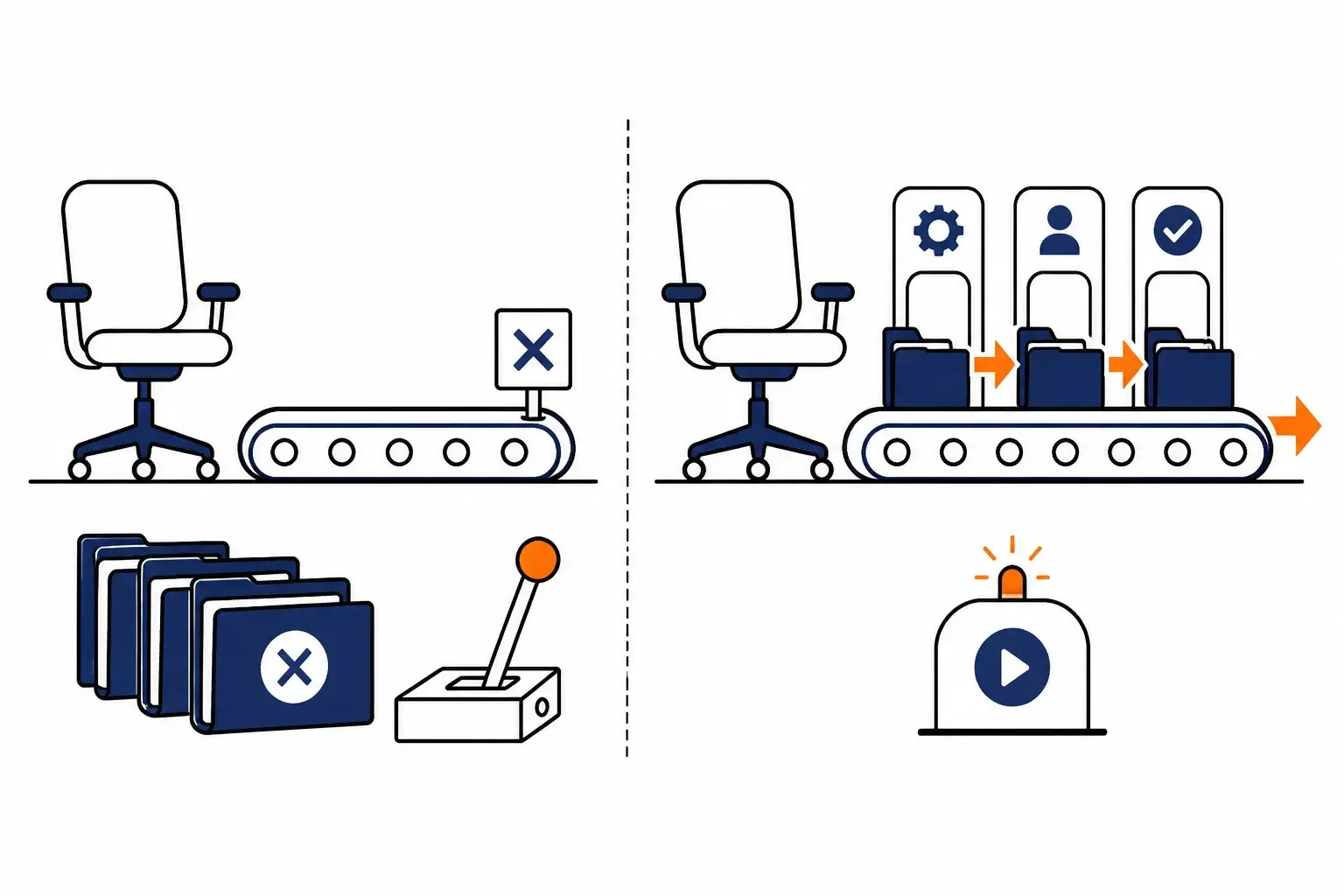
A CRM that supports the business gives a capable teammate enough context to act. The records show what happened, what happens next, and who owns it. HubSpot can preserve activities and changes on record timelines, but those timelines help only when the team consistently captures useful information and has access to it.
A founder-dependent portal works differently. Reports need your interpretation. Customer handoffs need your explanation. Follow-up slows when you are unavailable. HubSpot has become a second job instead of dependable infrastructure.

Hypothetical example: A growing B2B company’s founder returns after two weeks away. Several opportunities have unclear stages. A promising prospect waited days for follow-up. The service team is asking what sales promised because the answer is spread across meeting notes, email, and the founder’s memory.
The company kept working, but HubSpot could not give the team a shared, dependable account of the work. That gap is the starting point for deciding how much help the portal needs.
Recognize the corrections only you can make
The Founder Correction Layer is the undocumented knowledge you apply when HubSpot cannot tell the full story. You know which deal is serious, why an opportunity skipped a stage, what a customer was promised, who should act next, and which exception changes the usual process.
These corrections may take seconds, which makes them easy to overlook. Together, they allow normal reports to appear more dependable than the underlying records. If you cannot quote a HubSpot number in a leadership meeting without checking the source records, you have a data-trust problem.
Bad data often points beyond data entry. A deal may be in the wrong stage because the team has no shared stage definition. Missing customer context may come from an incomplete handoff. Unassigned follow-up may reveal weak ownership. The business may have a clear process in your head that was never translated into HubSpot.
Process debt builds as teams add stages, workflows, routing decisions, and exceptions under deadline without documenting or reviewing them. Eventually, people remember what an old automation does but cannot explain why it exists or whether the rule still fits.
HubSpot provides ways to capture operating rules. Properties store information on records, while required fields on manual record-creation forms can require specific information. Associations can connect related records, and pipeline stages can represent defined steps in a process. Those capabilities help after the team agrees on the process and the information each step requires. More automation will not settle unclear ownership or conflicting definitions.
At the hypothetical company, the founder recognizes three inflated opportunities and remembers why one signed customer needs a special handoff. The report looks usable after those private corrections. Before the founder returns, the team sees the same records and reaches different conclusions.
Test whether the team can operate for two weeks without you
Use the two-week founder absence self-check before deciding what kind of help to hire. Ask what your team could do while you were unavailable:
- Does every open deal have a clear next step and owner? Gaps suggest that follow-up still depends on personal reminders or unclear responsibility.
- Do pipeline stages mean the same thing to everyone? Different explanations suggest that stage definitions or operating rules need attention.
- Can a signed customer move into delivery without you explaining what was sold? If the delivery team has to contact you, the sales handoff is missing context, ownership, or both.
- Can the team pull a pipeline report you trust without your interpretation? Manual corrections suggest that the records, reporting inputs, or business definitions may be unreliable.
- Do follow-up, exceptions, and customer history live in HubSpot rather than inboxes or memory? Missing context suggests that the portal does not contain enough information for the team to act independently.
A few clear, contained gaps may point toward targeted cleanup. Repeated uncertainty across these questions calls for deeper diagnosis. This self-check identifies symptoms. It does not tell you whether the cause sits in configuration, data, process, ownership, adoption, or access. A professional CRM audit answers those questions.
Use a CRM audit when the symptoms have several possible causes
A professional HubSpot CRM audit goes beyond the founder self-check. It traces an observed problem through the business process and the portal configuration that supports it.
The review should cover data structure and quality, permissions and ownership, pipeline definitions, lifecycle and handoff logic, reporting inputs, integrations, and relevant automation. HubSpot reports depend on the underlying properties, stages, owners, timestamps, and filters. A report can be technically accurate while terms such as "qualified" or "active" mean different things across the team.
Return to the hypothetical company. The founder comes back after two weeks and finds that the pipeline report overstates active opportunities. The dashboard may be configured correctly. Sales reps may interpret stages differently, an automation may update a property at the wrong point, or the data model may fail to capture how the company qualifies deals. Some team members may simply have stopped maintaining required fields.
An audit follows those possibilities before recommending a fix. It also examines whether access and ownership match the intended operating process. HubSpot's permissions affect which records and tools users can view or change, so an apparent adoption problem may involve access or unclear responsibility.
Expect a useful audit deliverable to include prioritized findings, evidence for each finding, the related business risk, recommended sequencing, and an owner for each next step. It should also identify which findings call for contained cleanup, which require broader implementation, and which reveal a continuing operating need.
An audit is an assessment. Its purpose is to establish the cause and define the appropriate scope before anyone starts rebuilding the portal.
Choose the right scope for a HubSpot consultant
The audit creates a buying decision. The right path depends on whether you understand the problem, the operating process is settled, and someone inside the company can own future decisions.
A consultant should connect HubSpot configuration with how marketing, sales, service, and operations work. HubSpot supports configurable pipelines, stage rules, and team access, but those settings need to match decisions your team can follow.
Use these criteria to size the engagement.
Path | Triggering conditions | Appropriate scope | Good ending | Signs the scope is wrong |
|---|---|---|---|---|
Targeted cleanup | The issue and desired correction are clear. | A contained change to data, properties, ownership, pipelines, reporting, or limited automation. | The defect is corrected, tested, documented, and assigned an owner. | Too small when several teams or processes are affected. Too large when discovery expands beyond the known issue. |
Professional HubSpot CRM audit | You see symptoms, but several causes remain possible. | Review process, data, configuration, permissions, integrations, reporting inputs, and adoption. | Prioritized findings include evidence, sequencing, ownership, and a recommended path. | Too small when the cause is known. Too large when rebuilding starts before findings are agreed. |
Structured implementation | The future process is agreed, but HubSpot does not support it coherently. | Translate the process into CRM structure, handoffs, automation, reporting, access, documentation, and training. | The system supports the agreed process, and the team knows how to operate it. | Too small when strategy or ownership is unresolved. Too large when a contained correction would work. |
Fractional RevOps leadership | CRM decisions cross team boundaries, and no internal owner can coordinate them. | Ongoing guidance and execution across priorities, HubSpot, reporting, handoffs, and change management. | Decisions have an accountable owner, an operating cadence, and a managed backlog. | Too small when ongoing coordination is unnecessary. Too large when the need is a defined project. |
The founder-dependency test still applies: if the system depends on one leader to interpret reports, settle ownership, or approve routine changes, a one-time correction may leave the operating problem intact.
Match the engagement to the problem you can name
At the hypothetical B2B company, the founder and sales lead agree on what each deal stage means. A few fields are outdated, ownership assignments are wrong, and one rule-based workflow sends an internal alert to the wrong person. That calls for targeted cleanup. The process is settled, and the work has clear boundaries.
Cleanup can cover a small set of fields, pipeline definitions, imports, ownership rules, or limited automation. HubSpot lets administrators configure pipelines and stage rules. Imports should use identifiers such as Record ID, contact email, or company domain when updating existing records. The consultant should test the correction, document it, and confirm who owns it afterward.
Now assume the company sees duplicate records, inconsistent deal ownership, and reports that change depending on who prepares them. Several causes could produce those symptoms. A professional audit should separate data quality, configuration, permissions, integrations, process definitions, and adoption before anyone changes the portal.
A structured implementation fits once the team agrees on the future process. The hypothetical company may have decided how sales qualifies opportunities, what information service needs at handoff, and which measures leadership will review. A HubSpot consultant can then translate those decisions into connected data, fields, pipelines, handoffs, reports, access, documentation, and training. Tingom Group describes this type of work as building HubSpot infrastructure that holds the context the revenue process depends on.
Fractional RevOps leadership fits a continuing operating need. Marketing, sales, service, and leadership may require someone to own priorities, settle definitions, manage the change backlog, refine measurement, and coordinate system updates. Tingom Group’s Fractional RevOps Leadership offering uses that term for senior cross-functional ownership, rather than routine portal maintenance alone.
Fractional support cannot supply decisions that the founder and leadership team refuse to make. A rebuild also carries avoidable risk when the future process remains unsettled. Validate the operating decisions first, then choose the smallest engagement that can put them into practice.
Compare the work included, the risk, and who owns the outcome
A contained cleanup usually costs less than work involving migration, integrations, several teams, or multiple portals because fewer records, dependencies, and decisions are involved. An audit adds discovery and analysis. Implementation adds configuration, testing, documentation, training, and launch support. Ongoing support adds continuing ownership as reports, fields, processes, and adoption needs change.
Ask each HubSpot consultant to explain what affects the scope:
- Which business processes, teams, portals, and integrations are included?
- What assumptions are you making about our data quality and decision readiness?
- Who handles configuration, migration, testing, training, and project management?
- What specific deliverables will we receive?
- What access will you need, how will you protect it, and when will access be removed?
- How are scope changes approved and documented?
- What will our team own during the engagement and after launch?
- Which documentation and training materials are included?
- What post-launch support is included, and what requires a new agreement?
- What are the payment, cancellation, renewal, and termination terms?
For migrations and integrations, ask how the consultant will map data, preserve record relationships, test results, handle exceptions, and plan rollback or correction. HubSpot’s CRM deployment guidance covers requirements, configuration, integration, migration, testing, training, launch, and post-launch improvement. A proposal should state which of those responsibilities are included.
Ask who will perform the work and what similar implementations they have completed. Verify individual credentials through a public HubSpot Academy certification profile, badge, or certificate, and request relevant references when appropriate. Certification supports credibility, but it does not prove the assigned consultant understands your operating model, can manage the implementation, or will provide dependable support after launch.
Use the test to decide what happens next
Run the five-question founder self-check and the linked two-week absence self-audit. Record unclear stages, missing next steps, delayed handoffs, reports that needed interpretation, and details only you could supply.
Classify the immediate need:
- Targeted cleanup when the correction is known and contained.
- A CRM audit when symptoms are visible but the cause is unclear.
- Structured implementation when the process is agreed upon but HubSpot doesn’t support it.
- Fractional RevOps leadership when decisions, priorities, and ownership need continuing attention.
Bring that evidence to a consultant conversation. For the hypothetical company, it would explain why deals stalled and service lacked context during the founder’s absence.
Still unsure what is causing the friction? Use the GTM Gap Finder to validate the gap before choosing an engagement. Aim for dependable business infrastructure that supports the team for two weeks without founder correction.
Sources
- POC Stage: HubSpot Portal Asset or Liability? Founder Self-Audit — Tingom Group
- Work with Records — HubSpot Knowledge Base
- Manage Your CRM Database — HubSpot Knowledge Base
- Customize the Create Form for Each Object — HubSpot Knowledge Base
- HubSpot User Permissions Guide — HubSpot Knowledge Base
- Set Up and Manage Object Pipelines — HubSpot Knowledge Base
- HubSpot Onboarding and Implementation Services — Tingom Group
- Fractional RevOps Leadership — Tingom Group
- CRM Deployment Guidance — HubSpot Blog
- HubSpot Certification Overview — HubSpot Academy
- GTM Gap Finder: Identify Your Go-to-Market Weaknesses — Tingom Group