
FlowOps360™ Resource
Growth Channel Discipline Audit
A simple audit to validate whether you are intentionally testing growth channels and tracking what actually works.
Most B2B teams believe they are testing multiple ways to reach customers. They post on LinkedIn, attend events, and rely on referrals. But activity is not the same as discipline. The most common failure mode this resource prevents is confusing motion with progress—adding more tactics before understanding which ones actually produce results.
Who This Resource Is For
- B2B Founders & CEOs: Responsible for high-level growth decisions.
- Service-Based Firms: Where relationships and expertise drive revenue.
- Fractional Leaders: Validating resource allocation across teams.
- Growth Accountables: Anyone measuring if marketing and sales efforts actually work.
This is a readiness and discipline check, not a how-to strategy guide.
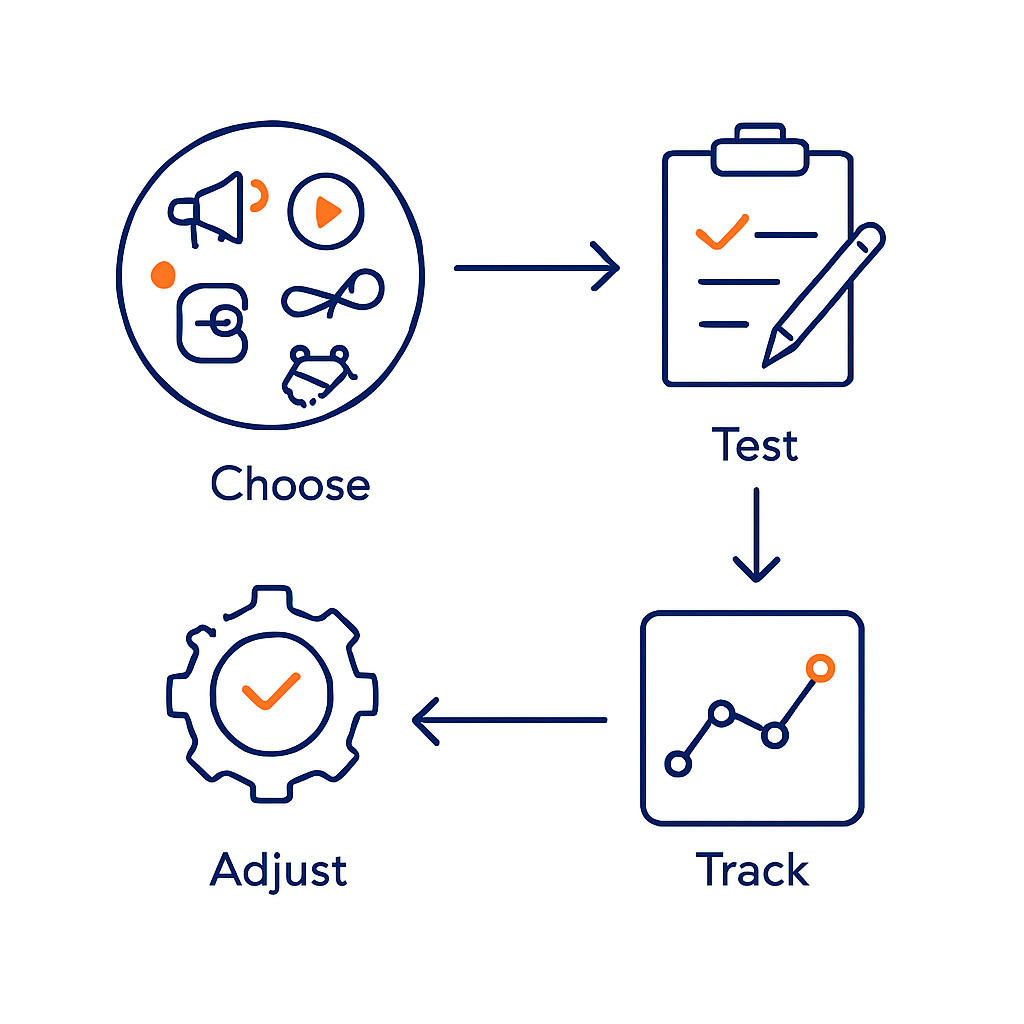
How the Audit Works
1. Choose
Intentionally select 2–3 priority channels based on where buyers actually are.
2. Test
Confirm each channel has a clear goal and success criteria—not just an ongoing presence.
3. Track
Validate that outcome metrics are tracked regularly and traced back to specific channels.
4. Adjust
Confirm that underperforming channels are paused and learnings are documented.
This loop is the difference between disciplined growth and expensive guesswork.
Example: Fictional Fractional CFO Firm
| Initial Belief | What the Audit Revealed |
|---|---|
| “We’re testing referrals, LinkedIn, webinars, and partnerships.” | Priority channels were never explicitly chosen. |
| “LinkedIn is working.” | No defined outcome or success metric was in place. |
| “Webinars should pay off eventually.” | High effort resulted in minimal qualified opportunities. |
| “Referrals are nice, but unpredictable.” | Referrals produced the strongest opportunities but weren’t tracked. |
Outcome: The firm selected two priority channels, paused low performers, and established a monthly review cadence.
What the Output Means
The audit uses a strict scoring model based on evidence—not intent.
Scale what’s working before adding anything new.
Simplify and validate before expanding effort.
Stop adding tactics immediately and establish basic tracking.
If your score is yellow or red, fix the fundamentals before adding new channels.
Stop Guessing. Build a Growth System.
Tingom Group helps organizations move from accidental scaling to intentional, evidence-based growth.