Take two weeks off. No phone. No checking in.
When you come back, can your team produce a pipeline report you would stand behind? Can they tell you which deals are real, which stages mean something, and which numbers to trust?
Or does the whole thing wait for you to return and sort it out?
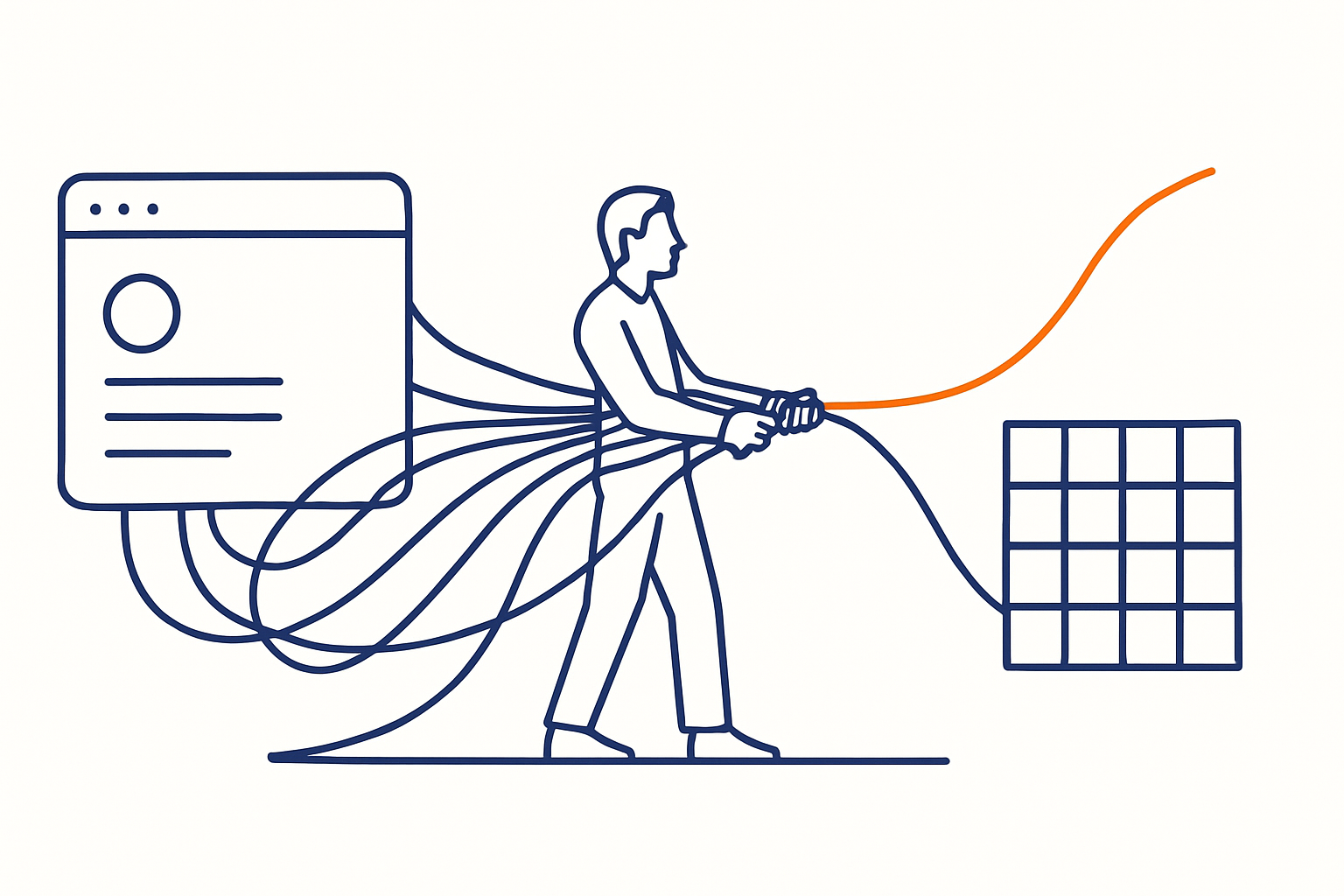
A HubSpot portal is an asset when the team can run revenue without the founder in the room.
It is a liability when it only works because you are there to correct it in your head.
A portal that requires its founder to be present is not infrastructure. It is a second job you cannot hand off.
Most Portals Start as Assets
Most founder-led portals start as assets and drift into liabilities. Nobody decides this. It happens one shortcut at a time.
You set up HubSpot fast to close deals. You bolted on a workflow here, a property there. You added a list, copied a pipeline, renamed a stage, created a report, and moved on.
You never went back, because going back never closed a deal. The portal grew. The trust shrank.
The Founder Correction Layer
Founder dependency usually does not look dramatic. It looks like small corrections only you can make.
You know which deals are real and which are wishful. You know one stage is mislabeled, and another gets skipped. You know that a report is only useful if you filter out three odd records first.
None of that is written down. It lives in you.
Quick check
- Can your team pull a pipeline report you trust?
- Can they explain why a deal is in its current stage?
- Can they tell which reports are reliable without asking you?
- Can they onboard a customer without your memory of the process?
The Data Trust Problem
Trust does not collapse. It erodes.
At first, someone double-checks a number. Then they export a list. Then a spreadsheet becomes the place where the team gets the “real” view. Eventually nobody quotes a HubSpot figure without a caveat attached.
The portal is still running. It has already been replaced.
The signal: If you cannot quote a HubSpot number in a leadership meeting without first checking the source records, your reporting problem is really a trust problem.
Process Debt Hides in Workflows
Every workflow, stage, required property, and routing rule was a decision someone made under deadline. Few were written down. Fewer were revisited.
That is how process debt accumulates. Automations fire. Contacts move. Emails send. Deals change stages. But nobody remembers why half of it exists.
You cannot trust a pipeline whose stages are interpreted rather than defined.
The Hiring Trap
At some point the pressure says: hire someone to own this. A RevOps manager. An ops lead. Someone to take the portal off your plate.
Here is what happens when the system is undocumented: the hire spends their first ninety days not building, but decoding. They reverse-engineer your workarounds and rebuild the correction layer you have been running in your head.
You did not remove the bottleneck. You moved it, and paid a salary to do it.
Headcount amplifies whatever system it lands on. A documented, trustworthy portal turns a new hire into a compounding force. An undocumented one turns the same hire into an archaeologist.
How to Audit Your Own HubSpot
You do not need a consultant to start. You need a disciplined pass through your own portal.
1. Inventory what runs. List active workflows, deal stages, required properties, integrations, and the reports leadership actually opens.
2. Mark what is load-bearing. A workflow is load-bearing if something breaks when it stops. Everything else is either orphaned or decorative.
3. Document intent. Write each decision in plain words a new hire could read instead of guess: what this stage means, who owns this list, why this automation exists.
The Way Out
A founder-dependent portal becomes a system the team can run through five steps: map, diagnose, design, implement, and monitor.
Map what exists and who depends on each part.
Diagnose founder dependency, data trust, process debt, and broken handoffs.
Design stages, ownership, reporting logic, and automations that earn their place.
Implement against the design, retire orphaned pieces, and document as you go.
Monitor the signals indicating the portal is still trustworthy.
The Question Worth Asking Now
A portal becomes a liability one unmade decision at a time. It becomes an asset the same way — one decision, named and written down.
Stop correcting the portal in your head. Find the places where your portal, pipeline, and process are carrying hidden friction.
See where the friction is hiding.
Use the GTM Gap Finder to see where your portal, pipeline, and process are carrying hidden friction.
Use the GTM Gap Finder